
.jpg)
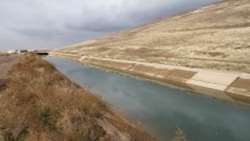
Boosting water productivity and improving water efficiency in Qazvin Irrigation Network in Iran despite the COVID-19 pandemic
https://en.maj.ir//-News/Boosting-water-productivity-and-improving-water-efficiency-in-Qazvin-Irrigation-Network-in-Iran-despite-the-COVID–19-pandemic
Boosting water productivity and improving water efficiency in Qazvin Irrigation Network in Iran despite the COVID-19 pandemic Boosting water productivity and improving water efficiency in Qazvin Irrigation Network in Iran despite the COVID-19 pandemic Boosting waterproductivity and improving water efficiency in Qazvin Irrigation Network inIran despite the COVID-19 pandemic color:#003B43">Amid more than a year-long COVID-19 pandemic, the Food andAgriculture Organization of the United Nations (FAO
Apr 13 202117:17
Iran is the ninth largest producer of canned olives in the world
https://en.maj.ir//-News/Iran-is-the-ninth-largest-producer-of-canned-olives-in-the-world
Iran is the ninth largest producer of canned olives in the world Iran is the ninth largest producer of canned olives in the world Iran is the ninth largest producer of canned olives in theworld The executor of the Olive project announced that more than120,000 tons of olive fruit in the countrywas harvested, and added that: Olive fruit production thisyear compared to previous years has a good trend and harvest from someprovinces still continues.Javad Mir-Arab Razi stated that: The amount of oliv
Feb 23 202113:39
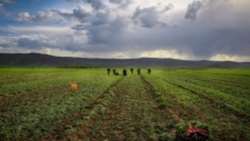
FAO empowers Iranian farmers to improve agriculture water productivity and reduce water withdrawal in Qazvin plain
https://en.maj.ir//News/FAO-empowers-Iranian-farmers-to-improve-agriculture-water-productivity-and-reduce-water-withdrawal-in-Qazvin-plain
FAO empowers Iranian farmers to improve agriculture water productivity and reduce water withdrawal in Qazvin plain FAO empowers Iranian farmers to improve agriculture water productivity and reduce water withdrawal in Qazvin plain FAO empowers Iranian farmers to improve agriculturewater productivity and reduce water withdrawal in Qazvin plainFAO providesIranian farmers with learning opportunities on handling low water productivitychallenges, monitoring local water resources, and adopting an optim
Jan 31 202115:14
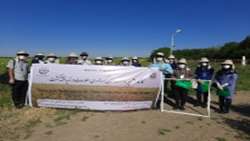
Crop mapping in Qazvin Irrigation Network in Iran
https://en.maj.ir//News/Crop-mapping-in-Qazvin-Irrigation-Network-in-Iran
Crop mapping in Qazvin Irrigation Network in Iran Crop mapping in Qazvin Irrigation Network in Iran Crop mapping in Qazvin Irrigation Network in Iran The Food and Agriculture Organization of the United Nations(FAO), in collaboration with the Ministry of Agriculture Jahad and the ImamKhomeini International University-Qazvin has started implementing the cropmapping activities in Qazvin Irrigation Network (QIN) in Iran. This activitycontributes to the water accounting component of the inter-regiona
Oct 24 202014:11
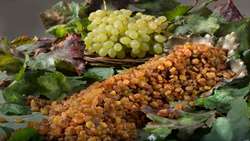
Export of Iranian raisins
https://en.maj.ir//-News/Export-of-Iranian-raisins
Export of Iranian raisins Export of Iranian raisins Export of Iranian raisins Director General of the Cold and Dried Fruits Office of theMinistry of Jihad-Agriculture announced a $ 164 million of raisin exports inthe last year. Darab Hassani, referring to the latest statistics of theInternational Organization of Grapes and its products in 2018, said: Grape cropoccupies 7.4 million hectares of arable land in the world, of which Iran'sshare of the total area under grape cultivation in the world is
Aug 3 202021:54
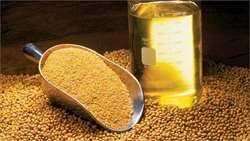
The Minister of Jihad-Agricultural has emphasized on the need for revolutionary action in producing oil and rapesead meal in the country
https://en.maj.ir//-News/The-Minister-of-Jihad–Agricultural-has-emphasized-on-the-need-for-revolutionary-action-in-producing-oil-and-rapesead-meal-in-the-country
The Minister of Jihad-Agricultural has emphasized on the need for revolutionary action in producing oil and rapesead meal in the country The Minister of Jihad-Agricultural has emphasized on the need for revolutionary action in producing oil and rapesead meal in the country According to a report from the information center of the ministry of Jihad- Agriculture, Mahoud Hojjati, to mobilize for the production of oil and rapeseed meal cultivation, has mentioned that: there are three to four million
May 7 201919:44
Pistachio
https://en.maj.ir//Pistachio-
Pistachio The pistachio tree was domesticated in Iran about three to four thousand years ago, and has been cultivated. Due to the relative resistance to dehydration of pistachios, and its low water requirement, as well as its capability to grow in alkaline and saline soils, it was welcomed by the gardeners from the old days, and 15% of the country's gardens were dedicated to this product. Sarakhs and Sabzevar are the oldest cities of pistachio cultivation in Iran. The history of pistachio cultiv
Jan 1 190000:00
Grapes
https://en.maj.ir//Grapes
Grapes Grapes proudction, export, consumption etc The grape harvest returns 7,000 years in the world and in the middle east 3686 years ago. Grape usage methods: fresh eating on the tables, raisins, grape juice and concentrate, canned and compote, fumigation and vinegar, grape juice, grape leaves, grape seed oil Global cultivation: more than 7.1 million hectares (ref: fao, 2016) World production: more than 77 million tons (11 kg per capita global production) (ref: fao, 2016) Major producers: spai
Jan 1 190000:00
Sour Cherries
https://en.maj.ir//Sour-cherries
Sour cherries Historical background: The cherries are native to southwest Asia and Europe, and the major cultivation areas of this crop in the world are circuits 25 to 45 degrees north and south of the earth. Cherries are very similar to cherries in botany. The cherry is scientifically known as Prunus cerasus from the genus Prunus, the Rosaceae family and the if a subfamily of Prunus. Major Producer Provinces: Khorasan Razavi (22%), East Azarbaijan (11%), Tehran (8%), Kurdistan (7%), Alborz (6%)
Jan 1 190000:00
Raisins
https://en.maj.ir//Raisins
Raisins Dried fruit of grapes, which are dried out either by the sun or using industrial dryers, are called raisins. The date of production of sun-dried raisins goes back more than 3,000 years. The discovery of raisins is thought to have occurred accidentally by the drying of grapes on the branch. Important areas of raisin production in Iran: Qazvin, East Azarbaijan, Khorasan Razavi, Hamedan, West Azarbaijan, Zanjan, North Khorasan, and Markazi Province are the major producers of raisins in Iran
Jan 1 190000:00