


.jpg)
Iran, FAO sign agreement to improve date palm production
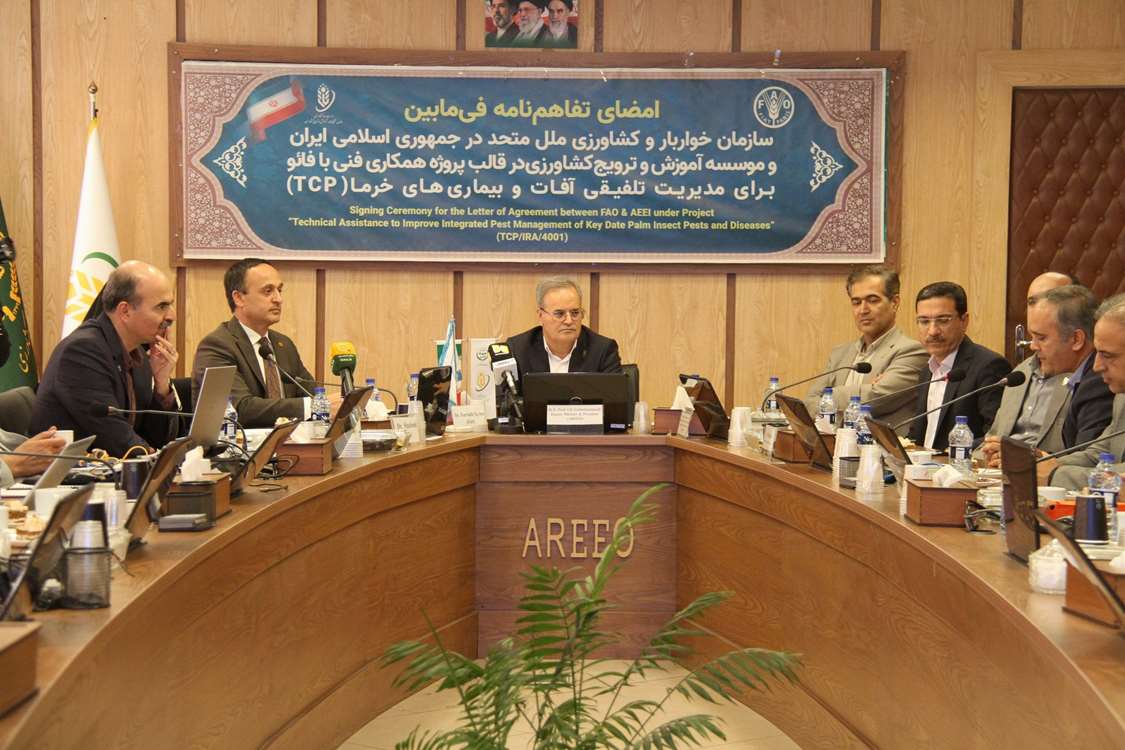
Tehran – Iran and the Food and Agriculture Organization of the United Nations (FAO) have signed an agreement to strengthen pest and disease management in the country’s date palm orchards and reduce production losses.
The Letter of Agreement was signed between FAO and Iran’s Agricultural Education and Extension Institute (AEEI) under a project aimed at improving integrated management of major date palm pests and diseases.
The agreement will support a multi-provincial capacity-building program benefiting around 1,720 farmers, agricultural extension officers and technical staff across nine provinces. The signing ceremony was attended by Agriculture Deputy Minister Golmohammadi.
“Strengthening the capacity of farmers and agricultural extension services is essential to ensuring that pest and disease management measures are effective, timely and sustainable,” said FAO Representative in Iran Farrukh Toirov.
The program will be implemented in Sistan and Baluchestan, Kerman, Hormozgan, Fars, Bushehr, Khuzestan, Yazd, South Khorasan and Isfahan provinces.
It will focus on identifying and monitoring major threats, early detection and the application of integrated and environmentally responsible pest and disease management practices. Key threats include the red palm weevil, date palm borers, Dubas bug and major date palm diseases.
Iran is one of the world’s leading date producers, producing around 1.3 million tons of dates annually. Date palms are cultivated on approximately 260,000 hectares, with some 40 million trees across the country.
Date production provides income and employment for farming communities, particularly in southern and central Iran, while supporting a wider value chain involving harvesting, processing, packaging, transportation, trade and exports.
Toirov said the initiative would help protect date palm production, reduce economic losses and strengthen the livelihoods of communities dependent on the sector.
The cooperation is also expected to improve the quality and competitiveness of Iranian dates in domestic and international markets by promoting stronger surveillance, early intervention and more sustainable orchard management.


comment please