
.jpg)
FAO launches Green Cities Initiative to help transform agri-food systems, end hunger and improve nutrition
FAO launches Green Cities Initiative to help transform
agri-food systems, end hunger and improve nutrition
Turning the
recovery from COVID-19 into an opportunity for cities to become more
sustainable, resilient, and provide access to healthy foods for all
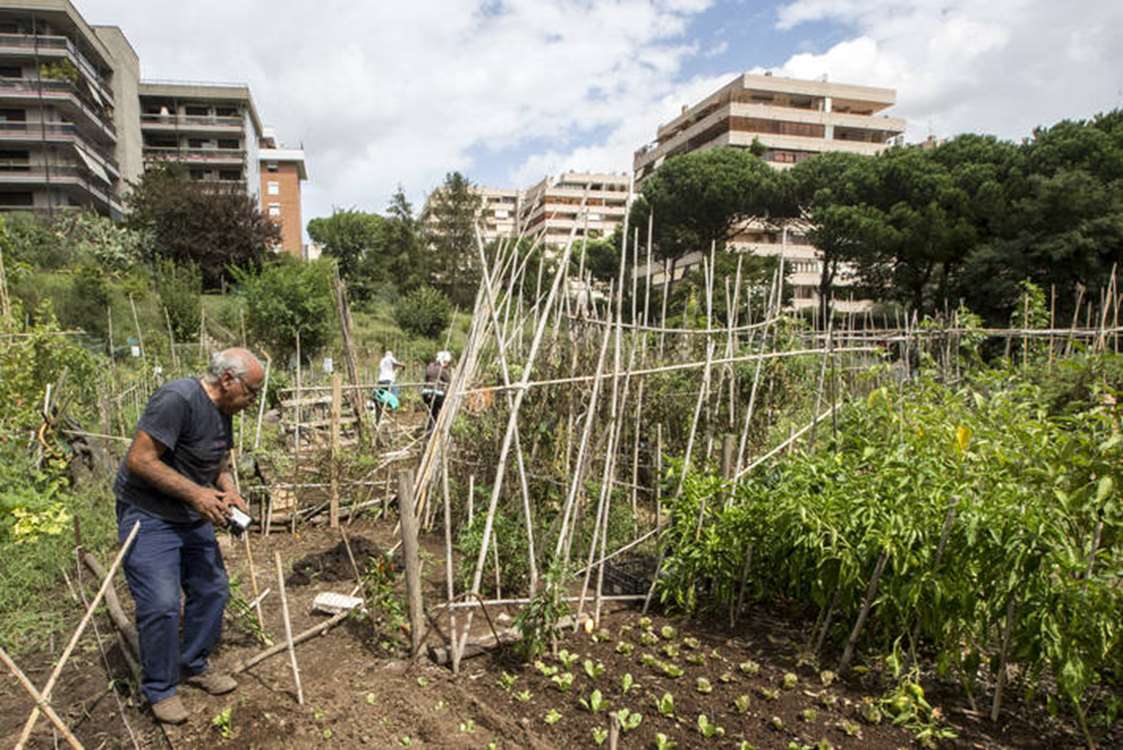
A farmer working at
an urban garden, in Rome, Italy.
FAO unveiled today
its new Green Cities Initiative and Action Plan to help transform agri-food
systems, end hunger and improve nutrition in and around the cities in a post
COVID-19 era. The launch took place at a high-level virtual event entitled
"Green Cities to Build Back Better for SDGs - A New Powerful Venture" hosted by
FAO during the 75th session of the UN General Assembly.
Highlighting the
vast potential of cities in reducing the impacts of the COVID-19 pandemic on
people's health and food security and contributing to climate change
mitigation, FAO Director-General QU Dongyu encouraged all partners to appreciate
the essential role of cities in building back better and the urgency of
innovative, comprehensive and coordinated actions.
"For cities to
become much greener, more resilient and regenerative, we need to rethink the
way urban and peri-urban areas are designed and managed", he said in his
opening remarks at the event. "With only ten years left to achieve the
Sustainable Development Goals", QU added, "we need a fundamental
change of mindset and remodelling our business approaches".
A new way of thinking
FAO Green Cities
Initiative aims to improve the livelihoods and well-being of urban and
peri-urban populations in at least 100 cities (15 metropolitan, 40 intermediary
and 45 small cities) around the world in the next three years, looking to have
1000 cities join by 2030.
In particular, the
initiative is focused on improving the urban environment, strengthening
urban-rural linkages and the resilience of urban systems, services and
populations to external shocks. Ensuring access to a healthy environment and healthy
diets from sustainable food systems, it will also contribute to climate change
mitigation and adaptation and sustainable resource management.
The new initiative
also includes the creation of a "Green Cities Network", where cities
of all sizes - from megapolis to medium to small - will exchange experiences on
best practices, successes and lessons, as well as build city-to-city
cooperation opportunities.
FAO will enhance
its work with local and national authorities, city councils, mayors, the
private sector, academic institutions and international organizations, and
engage with urban communities - especially with women and young people.
"The
initiative we are launching today is a product of a new way of thinking. I hope
that you are inspired to join us and support it by your innovative way of
implementation!", the FAO Director-General concluded.
Why is urban greening important?
The world is
becoming more and more urbanized. By 2050, almost 70 percent of the world's
population will be living in cities, with 90 percent of the increase occurring
in Africa and Asia. About 70 percent of all food supplies are consumed by urban
dwellers - a number that is steadily on the rise.
Population growth
and rapid urbanization imply dietary shifts and an increasing demand for basic
goods and services, as well as growing competition for natural resources to
ensure access to healthy diets for all. Local administrations are finding it
more and more difficult to meet the needs of urban and peri-urban populations
and the COVID-19 pandemic has added new challenges, such as food systems
disruptions, loss of jobs and food insecurity, worsening conditions especially
for the most vulnerable.
As a result, many
urban and peri-urban communities are now more than ever exposed to food and
nutrition insecurity combined with diet-related non-communicable diseases as
well as increasing rates of overweight and obesity.
Today cities
consume almost 80 percent of the total energy produced in the world. They are
responsible for 70 percent of global waste and account for about 70 percent of
global energy-related greenhouse gas emissions.
Maintaining
sustainable food systems and having more green spaces, including urban and
peri-urban agriculture and forests are essential for cities, making them more
resilient in dealing with the impacts of climate change and COVID-19, ensuring
that health-related issues do not disrupt urban food supply and distribution.
About the event
In addition to the
FAO Green Cities Initiative, today's event also highlighted initiatives and
programmes that are scaling up innovation and accelerating action,
including Milan Urban Food Policy Pact, the New Urban
Agenda, World Sustainable
Urban Food Centre of Valencia, Hand-in-Hand Initiative and other
strategic partnerships.
The high-level
event saw the participation of Achim Steiner, Administrator of the
UN Development Programme (UNDP), Maimunah Mohd Sharif, Executive
Director of United Nations Human Settlements Programme (UN-Habitat); LI
Yong, Director-General of United Nations Industrial Development
Organization (UNIDO); Jürgen Rigterink, Acting President of
European Bank for Reconstruction and Development (EBRD); Carlos Manuel
Rodriguez, Chief Executive Officer, Global Environment Facility
(GEF); Rémy Rioux, Chief Executive Officer, Agence Française de
Développement (a message was delivered on his behalf); Javier
Manzanares, Deputy executive secretary of the Green Climate Fund, among
others.
The event also
featured testimonials from the following city leaders around the globe that are
in line with the FAO Green Cities Initiative: Daniel Quintero,
Mayor of Medellin, Colombia; Giuseppe Sala, Mayor of Milan, Italy
(via video message); Manuel de Araujo, Mayor of Quelimane,
Mozambique; Wen Guohui, Mayor of Guangzhou, People's Republic of
China (via video message); Souad Abderrahim, Mayor of Tunis,
Tunisia; Bruno Covas, Mayor of Sao Paulo, Brazil (via video
message) and a message from the office of the Mayor of New York.
http://www.fao.org/news/story/en/item/1308436/icode/