


.jpg)
Iran sounds alarm on climate linked threats to global ‘life giving arteries’
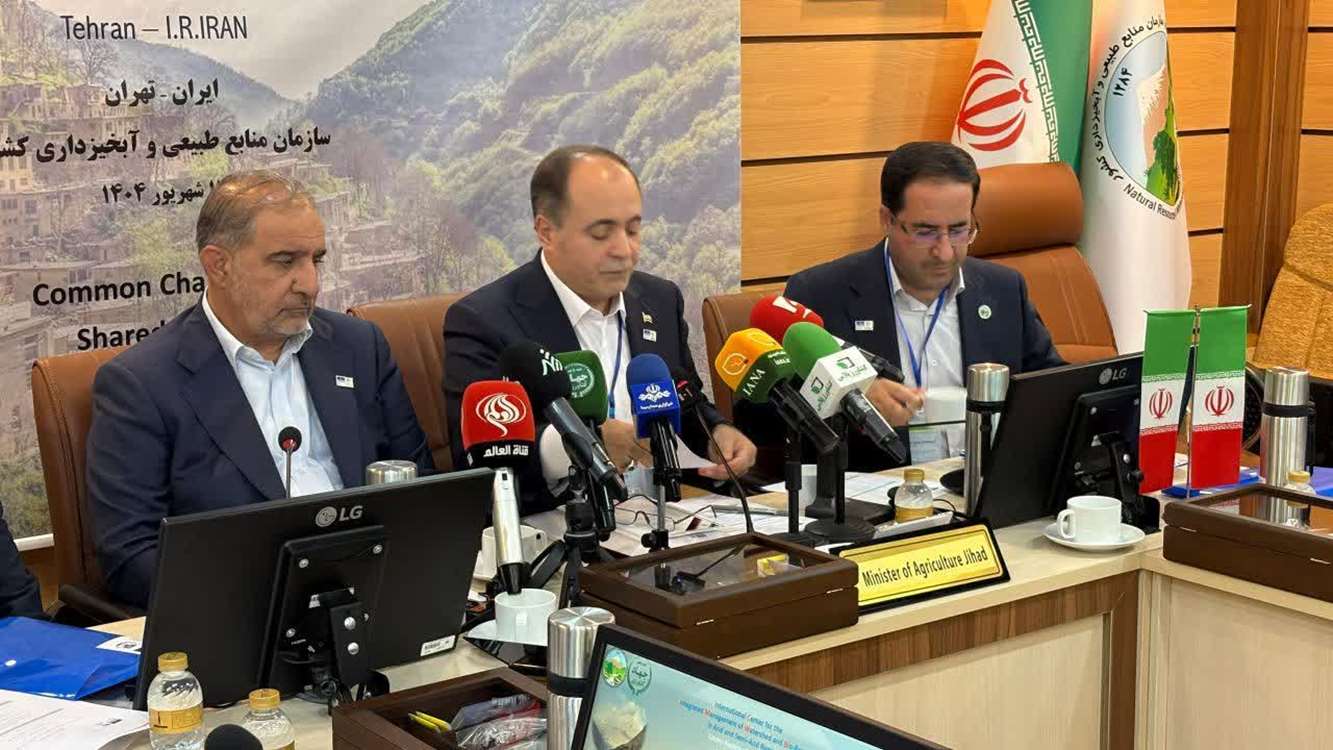
Tehran – Iran’s Agriculture Minister urged swift and unified global action to address interconnected environmental crises, from climate change to desertification, during the inaugural meeting of the Board of Governors for the International Center for Integrated Watershed Management.
Addressing a gathering of national and international delegates on Monday, Minister Gholamreza Nouri framed the challenges as a critical threat to both nature and human livelihood.
He opened his remarks by congratulating the birth anniversary of the Prophet Muhammad (PBUH) and welcoming representatives from member states, the head of the Iranian Parliament's Agriculture Commission, and other dignitaries.
“Nature and human communities are under severe pressure from a confluence of threats: climate change, frequent floods and droughts, increased soil erosion, declining biodiversity, and immense strain on our water and land resources,” he said.
Nouri elevated the meeting's focus by describing watersheds and their ecosystems as the planet's vital “life-giving arteries” and argued that protecting biological resources is an imperative, not a choice. “These resources are an irreplaceable heritage for future generations. Their protection, restoration, and wise management in our rapidly changing world is a critical and urgent necessity,” he asserted.
The Minister positioned the International Center as a key vehicle for solutions, highlighting its role in fostering sustainable management through innovative research, capacity building, and cross-border cooperation. He insisted that overcoming these "complex challenges" requires "an integrated, participatory, and knowledge-based approach—one that transcends political and geographical borders to view ecosystems as a single entity."
Citing past achievements built on cooperation with Iranian colleagues and international partners like UNESCO, Nouri outlined a forward-looking agenda centered on sustainable development, climate resilience, biodiversity conservation, and improving local livelihoods.
He then called on the Board of Governors for guidance and support on several key initiatives: Boosting Regional Collaboration: Enhancing cooperation on shared watersheds with neighboring countries and protecting biodiversity corridors and food security, particularly within the Economic Cooperation Organization (ECO) region and other vulnerable arid zones; Engaging the Private Sector: Attracting greater private investment for green technologies and sustainable business models linked to natural resources, water footprint reduction, and carbon markets; Strengthening Global Advocacy: Intensifying international outreach to promote awareness of sustainable agriculture, aligned with major UN conventions (on climate change, desertification, and biodiversity) and programs of organizations like UNESCO, the Shanghai Cooperation Organization, and BRICS; Expanding Knowledge Sharing: Developing educational programs to share research and successful experiences in managing dust storm hotspots, drylands, water conservation, and runoff, especially in countries with low forest and high desert coverage.
Concluding with a note of appreciation, the Minister thanked UNESCO for its "continued trust and partnership," framing the Center's work as a crucial investment. “Our steps today are vital not only for the present but for the food security, well-being, and health of generations to come,” he said.


comment please